My Turn, Your Turn
Learning to take turns
Taking turns is an important part of playing and working together, but it is not easy. Children need a lot of practice and help from adults to learn to do it well.
- Audience
- Caregiver
- Subject
- Social-Emotional Learning
- Age
- KindergartenPre-KPreschoolToddler
- Languages
- ArabicBrazilian PortugueseCape VerdeanEnglishFrenchHaitian CreoleRussianSimplified ChineseSpanishVietnamese
- Materials
- Ball, blocks, chalk
The Basics
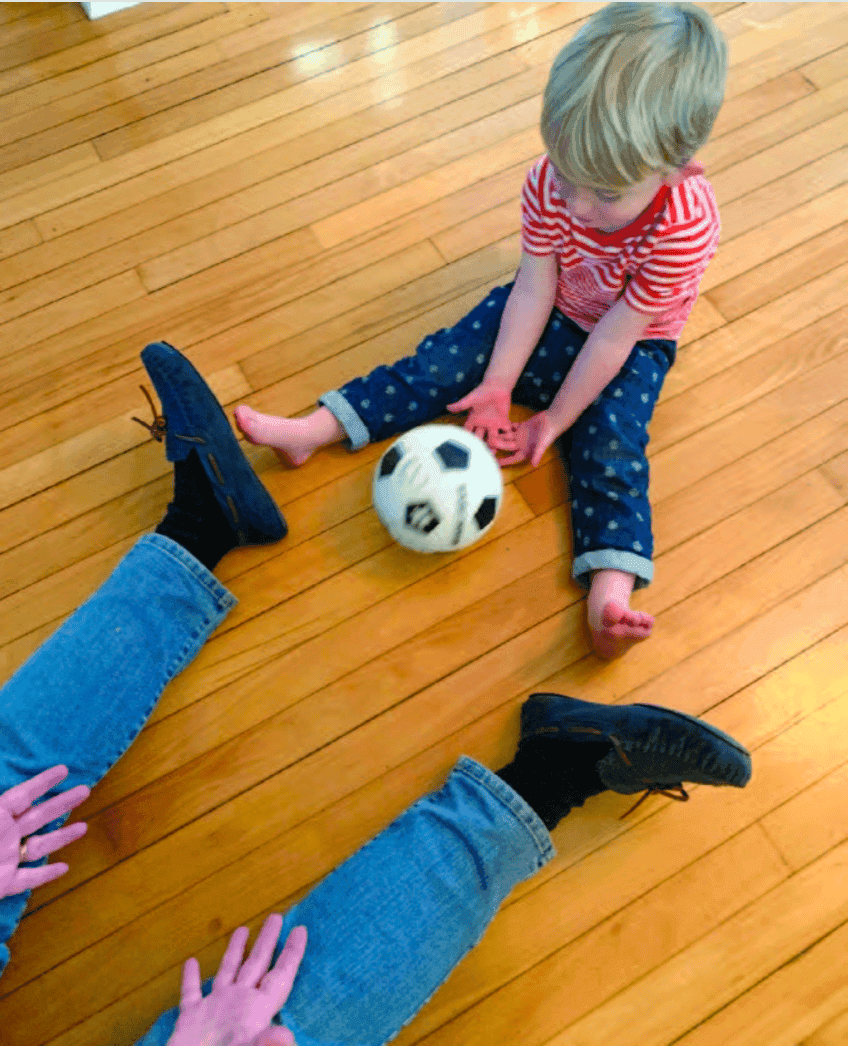
A baby smiles. An adult smiles back. Then the baby smiles again. This back-and-forth is a first step in learning to take turns. Turn-taking can be hard when young children really want something. They may want a turn with a crayon that someone else is using. Or they may be using a crayon and not be ready to let someone else have a turn. Turn-taking involves lots of waiting and managing emotions. These skills can also be difficult. The more your child practices taking turns, the better they get!
Getting Started
Make sure everyone knows the rules. Turn-taking can be even harder if your child does not know what to expect or when their turn might come. Use clear language. “First me. Then you. Then me.” If the rules change, make sure your child knows the new rules.
Things to Try with Ages 2 to 5
Ball toss
- Play a simple game of tossing or rolling a ball between you and your child. Explain the rules. “First, I will pass the ball to you. Then, you will pass the ball to me.” Try passing the ball as slowly as you can. Try going faster.
- Make the rules a little more complicated. Count to three before each pass. Or make a silly face each time you pass. Or pass the ball using only your feet. Say, “rule change!” and explain the new rule. Take turns making up new rules with your child.
Build together
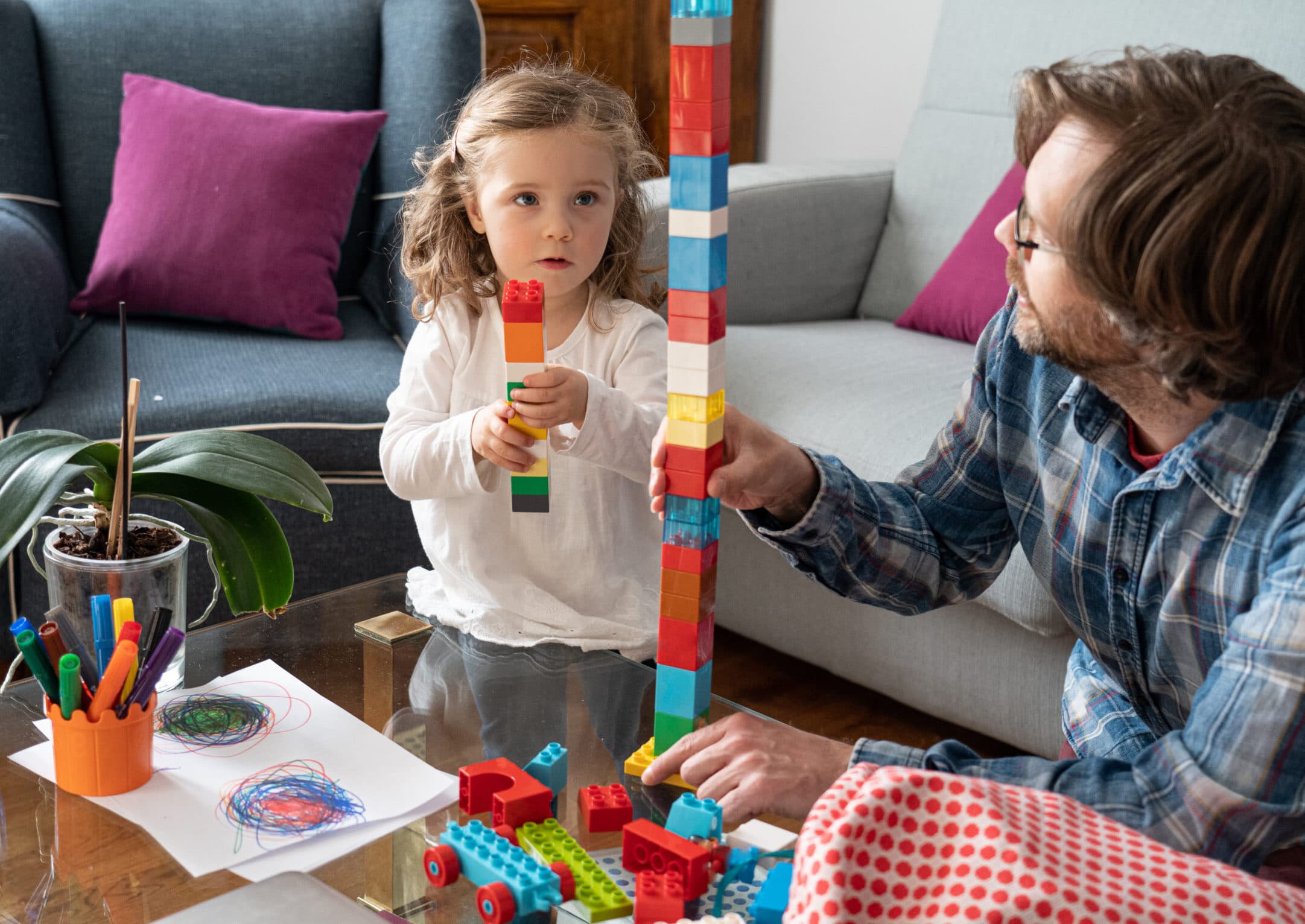
- Invite your child to line up all the blocks with you. Take turns adding one block at a time to the line. Explain the rules. “First, I’ll put down a block, then you put down a block, then me… until we run out of blocks.”
- Build a tall tower with your child. Explain that you will each take turns adding blocks one at a time until the tower falls. Start building! It doesn’t matter if the tower topples—you can build it again and again.
Chalk drawings
- Go outside! Invite your child to choose one color of sidewalk chalk. “Let’s make one drawing together. We can take turns using only the color you chose.” Then pass the chalk back and forth. “I’m adding some flowers. What are you going to add next?” (You can also do this inside with sidewalk chalk on a piece of cardboard.)
- Start with a simple story starter. For example, “One day, the dog put on a hat…” Explain the rules and take turns adding a little bit to the story. Use sidewalk chalk to draw a picture of your story together.
Everyday Interactions
Talk about turn-taking as it happens during your daily routines. For example, when you’re each pouring cereal from the box or waiting in line at the store.
Invite your child to cook or bake with you. Take turns adding ingredients and stirring.
Model, Notice, Practice
“I will wait until you are done. Then it will be my turn.”
“I see that you’re having a hard time waiting. It will be your turn again after your sister’s turn.”
“It’s not your turn to use the train yet. You can color while you wait.”
Related Resources
 CaregiverActivity
Figuring It Out
Stuck zippers! Snatched toys! Spilled milk! Learning to be a good problem-solver helps children be independent and feel more comfortable trying new things. It also helps them enjoy playing with others.
 CaregiverActivity
Listen, Think, and Do
“Please wait.” “Eat your spaghetti with your fork.” “Give your friend a turn.” Learning the skills to follow directions helps children learn to behave nicely with others.
 CaregiverActivity
More Than Me
“I am happy. But you seem sad?” It is hard to imagine how others feel. But it is a skill that children need to play with others and make friends.
 CaregiverActivity
Deep Breaths and Happy Dances
Really happy, really sad, or really mad—feelings can be hard to manage. When a child can manage their feelings, they are able to show their feelings without losing control.
 FeaturedCaregiverActivity
Happy, Sad, Mad
Children experience lots of different feelings. Every feeling has its own name. But each child feels and shows their feelings in different ways.
 CaregiverActivity
Stories Full of Feelings
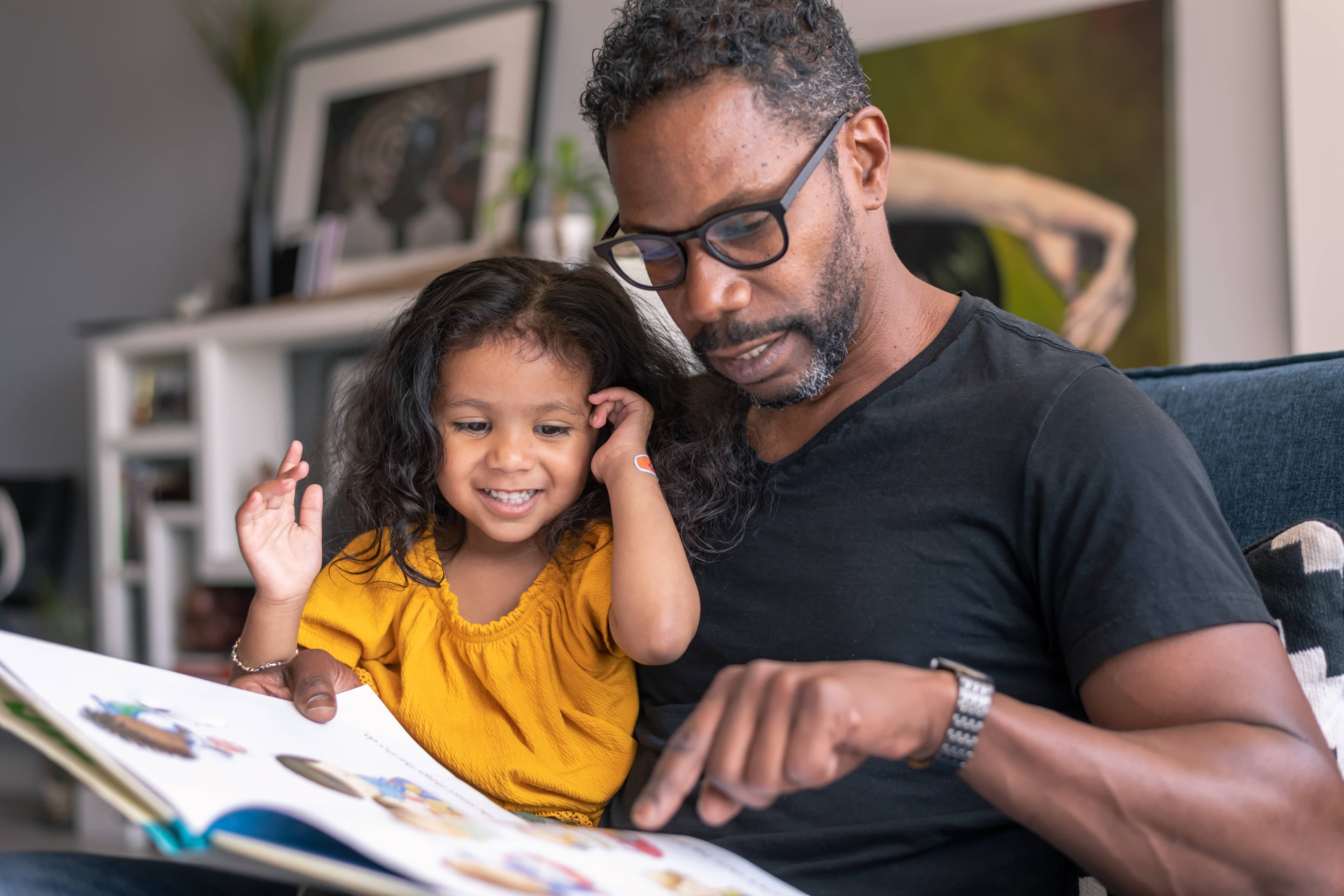
Books are great tools to support young children’s social-emotional learning. The characters in the stories introduce many different feelings and ways of being a good friend or helper. And many stories also share creative ways of problem-solving.
 EducatorGuide
Me, You, We – Playgroup Guide
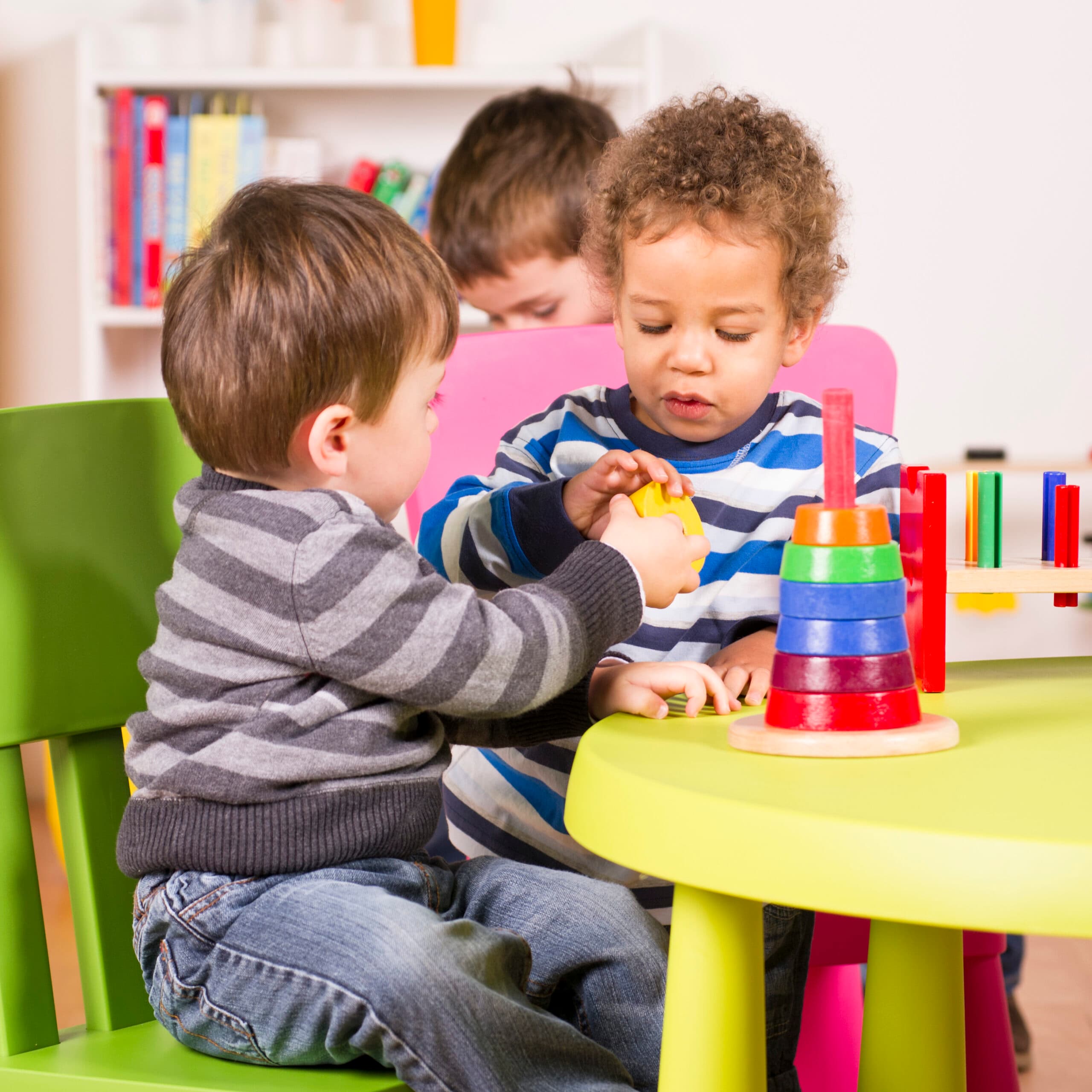
Playgroup structure to maximize social-emotional learning during your playgroup.
 CaregiverActivity
Painting Snow
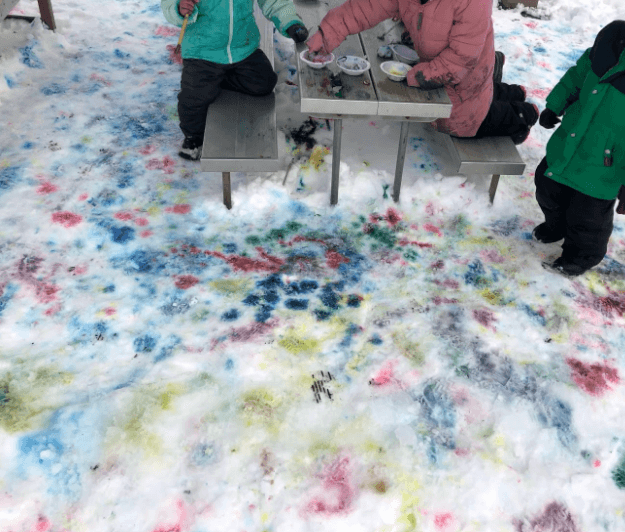
Children can paint freely across a unique surface and see where their ideas take them. Experiencing textures and temperatures you feel, like the hard ground, cold snow, and frozen, slippery ice.